 TRUE NORTH MINING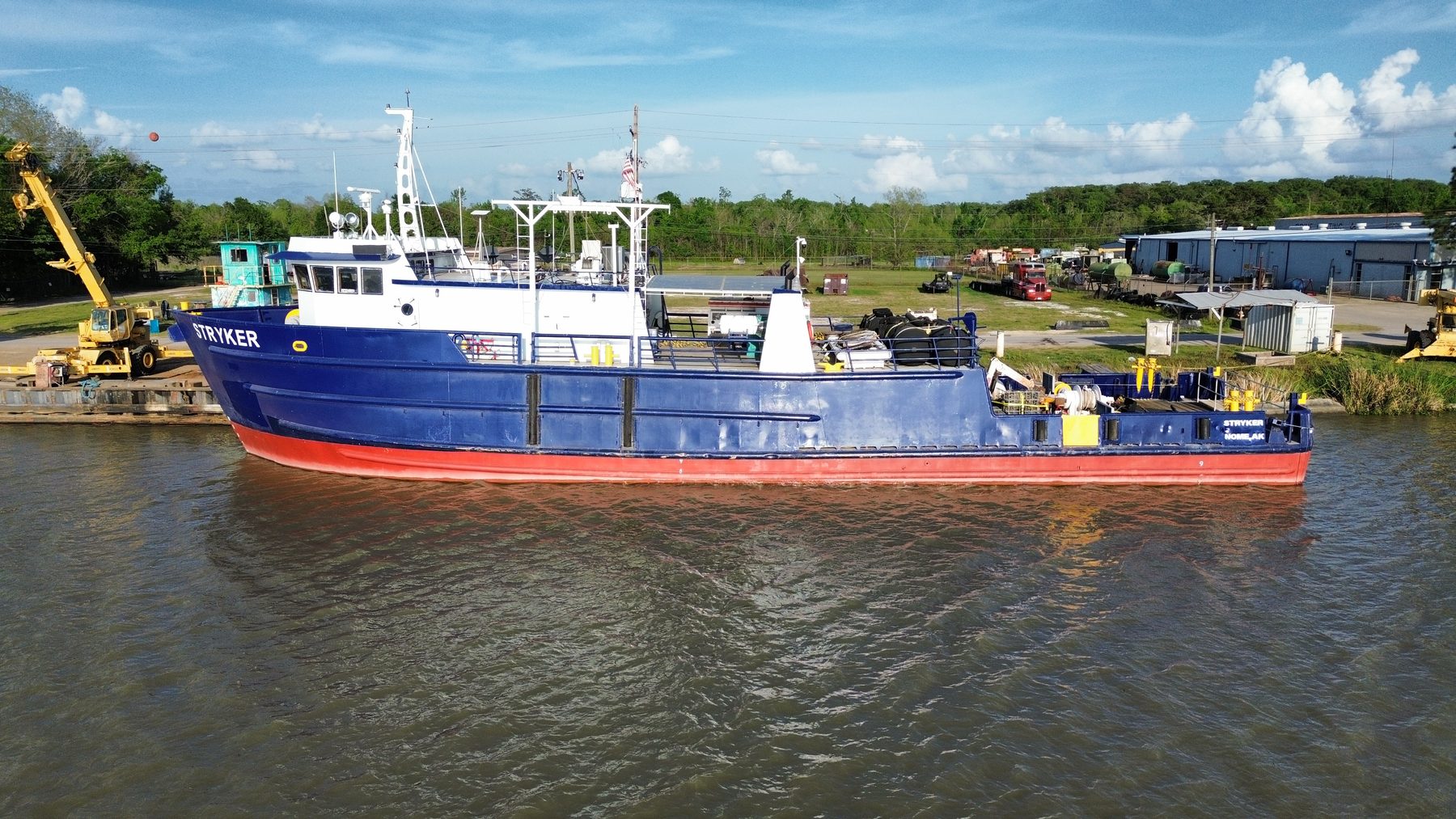
Somewhere north of your comfort zone.
There is still gold on the floor of the Bering Sea, and there are still people willing to go and get it. This is an invitation to back them — and, if you want it, to stand on the dock in Nome and watch it come up.
Get the white collar a little dirty
Most of what passes for investing now happens entirely on a screen. You buy an index that owns a slice of a company that licenses a brand to a contractor in a country you will never visit, and at no point does anything you own get cold, wet, or heavy.
This is the opposite of that. Two steel hulls out of a Louisiana yard, an excavator working the seafloor a hundred-odd miles below the Arctic Circle, a crew who fix what breaks because there is nobody else within reach to call, and a six-month window that closes whether or not you were ready. It is one of the few things left that you can put money into and then go and physically stand next to.
Nome has been a gold town since 1898. The stampeders took what was in the sand at the waterline and stopped where the surf began. The ground kept going.
What you would actually be backing
True North Mining LLC recovers placer gold from the seafloor of Norton Sound, off Nome, Alaska. Two vessels — the M/V Nikola and the M/V Stryker — work the ground through a May – Octoberseason. Offshore discharge is authorised by the Alaska Department of Environmental Conservation under AKG374036. Theoperation page sets out how recovery actually works, step by step, and the gallery is photographs of the real thing rather than renderings of an intention.
It is a working operation with hulls, permits, machinery and payroll. That is the case for it. It is not a claim about what it will earn.
Most investmentsnever get cold
Come and look at it
Diligence on a business like this is not really done on paper. You are welcome to come and see the operation for yourself — the vessels, the recovery plant, the people running it — and to ask the crew the questions you would not think to ask a deck.
To be straight about what that is: a visit means the yard, the dock and the plant. Both vessels are documented for coastwise trade as working vessels and neither is certificated to carry passengers, so time at sea aboard one is not something the company can offer and is not part of any investment. Visits are arranged case by case, at the company's discretion, and are not consideration for anything.
Getting there
Nome is not on the road system. Nothing drives there from anywhere, which is a large part of why the ground offshore is still there to be worked.
If you fly your own aircraft, Nome Airport (PAOM/OME) has two paved runways —6,176 feet and 6,009 feet, both 150 feet wide, asphalt and grooved — with Jet A on the field. It is a non-towered field, so your pilot will want to pull the current chart supplement and confirm the numbers rather than take ours. If you would rather not, Alaska Airlines runs scheduled 737 service from Anchorage and the flight is about an hour and a half.
We will meet you at the airport. Set your expectations now: there is no car service and there is no limousine. Nome has a few miles of pavement and then it stops. You will be picked up in a side-by-side, you will be handed a jacket that is warmer than the one you brought, and by the time you reach the dock you will have a fair amount of the Seward Peninsula on your boots.
Nobody has ever complained about that part.
The off-season programme
Three days in the north, and two of them are yours
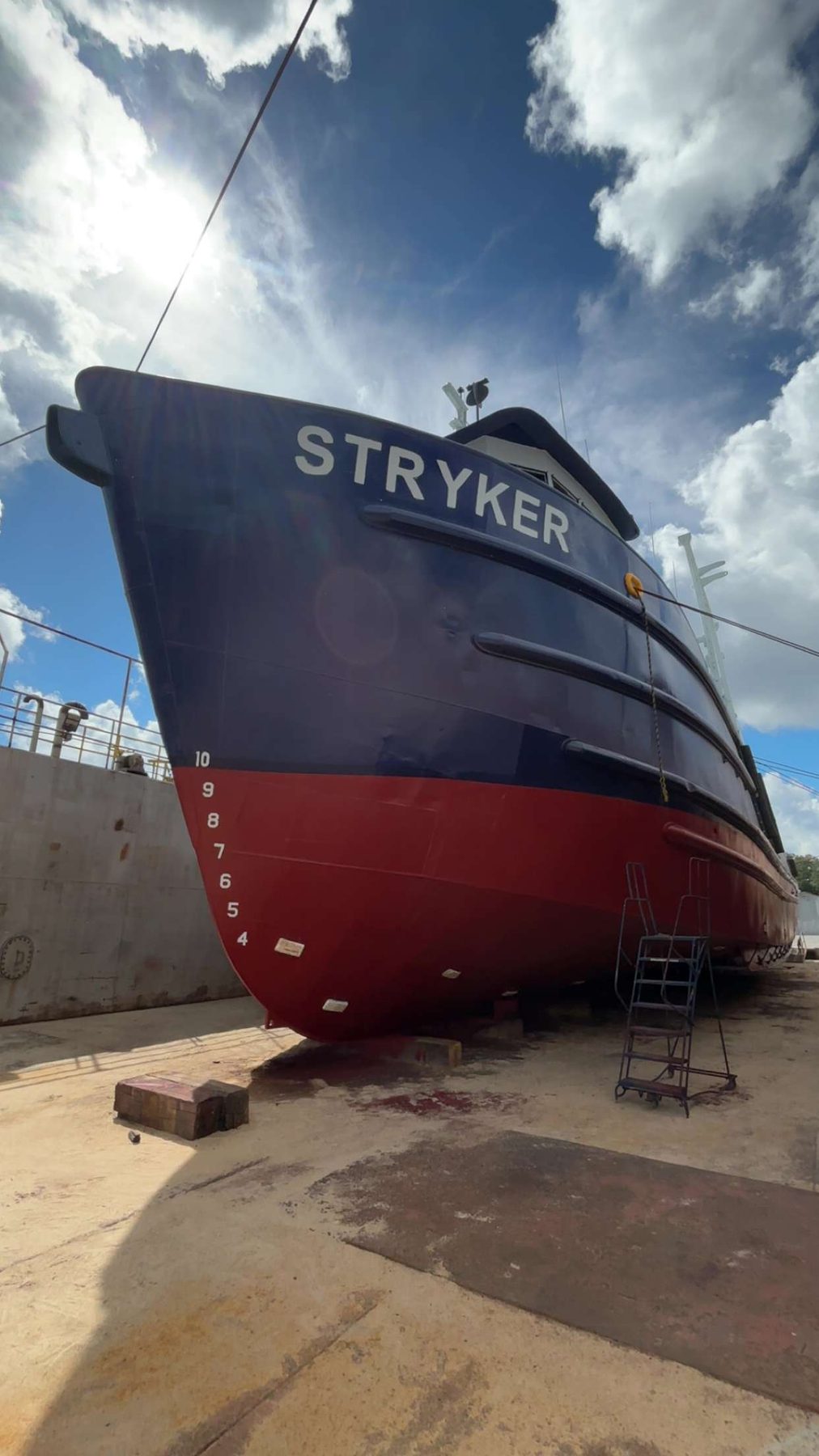
The season runs May – October. Everything after that is haul-out, survey and repair — which, if you want to understand this business, is the better time to come. A vessel in the water shows you her paint. A vessel on the hard shows you everything.
The operation, opened up
The recovery plant with the covers off. Both vessels — decks, wheelhouse, engine room, and the parts of a hull you only ever see out of the water. The excavator, the crane, the sluice. The people who run all of it, answering questions with nobody from the company standing over them.
Then you go and enjoy yourself
Heli-skiing, fishing, or hunting, depending on the season and what you actually like doing. Arranged through licensed Alaskan operators who do this for a living, hold the permits for it, and carry their own insurance — booked in your name, at cost, on your own account.
The range
There is a range, and investors are welcome on it. Sessions are arranged in advance and run supervised with a range officer present — not because anyone doubts you can shoot, but because an unsupervised firing line on company ground is the one arrangement no sensible insurer will write.
Dates depend on where the vessels lie once they come south and on the operators' own seasons. Ask, and we will tell you what is actually available rather than what sounds good.
What this page deliberately does not say
There are no projections here. No return figures, no allocation table, no chart of where the gold price is going. That is not modesty — it is that a forward-looking number means something only alongside the assumptions and the risk factors it depends on, and those belong in definitive offering documents delivered to a specific investor, not on an open page read by people who never see the caveats. Anyone in this business who leads with the number is telling you something about themselves.
The part that should give you pause
Placer mining is a hard business and this one is concentrated: a single district, a six-month weather-dependent season, two vessels that have to keep running a long way from a shipyard, and a commodity whose price the company does not control. A bad season is not a rare event here; it is a normal one that the operation has to be built to survive.
So the honest test is this. If the entire amount you put in went to the bottom of Norton Sound and stayed there, would it change your life? If the answer is yes, this is not for you, and no amount of romance about the Bering Sea should move you off that. If the answer is no — if this is capital you can genuinely afford to have at risk in exchange for a stake in something real — then there is a conversation worth having.
How participation works
Any offer of securities is made solely through definitive offering documents. Before those are provided, your accredited status has to be verified under Rule 506(c). A written self-certification is not sufficient — the company is required to take reasonable steps to confirm it independently, which in practice means documentation or a letter from your accountant, attorney or broker-dealer.
The company works with a small number of investors and expects to keep it that way.